Grand River Rainscaping
Slow it down! Soak it in!
Find LGROW services and Resources below
What is Rainscaping?
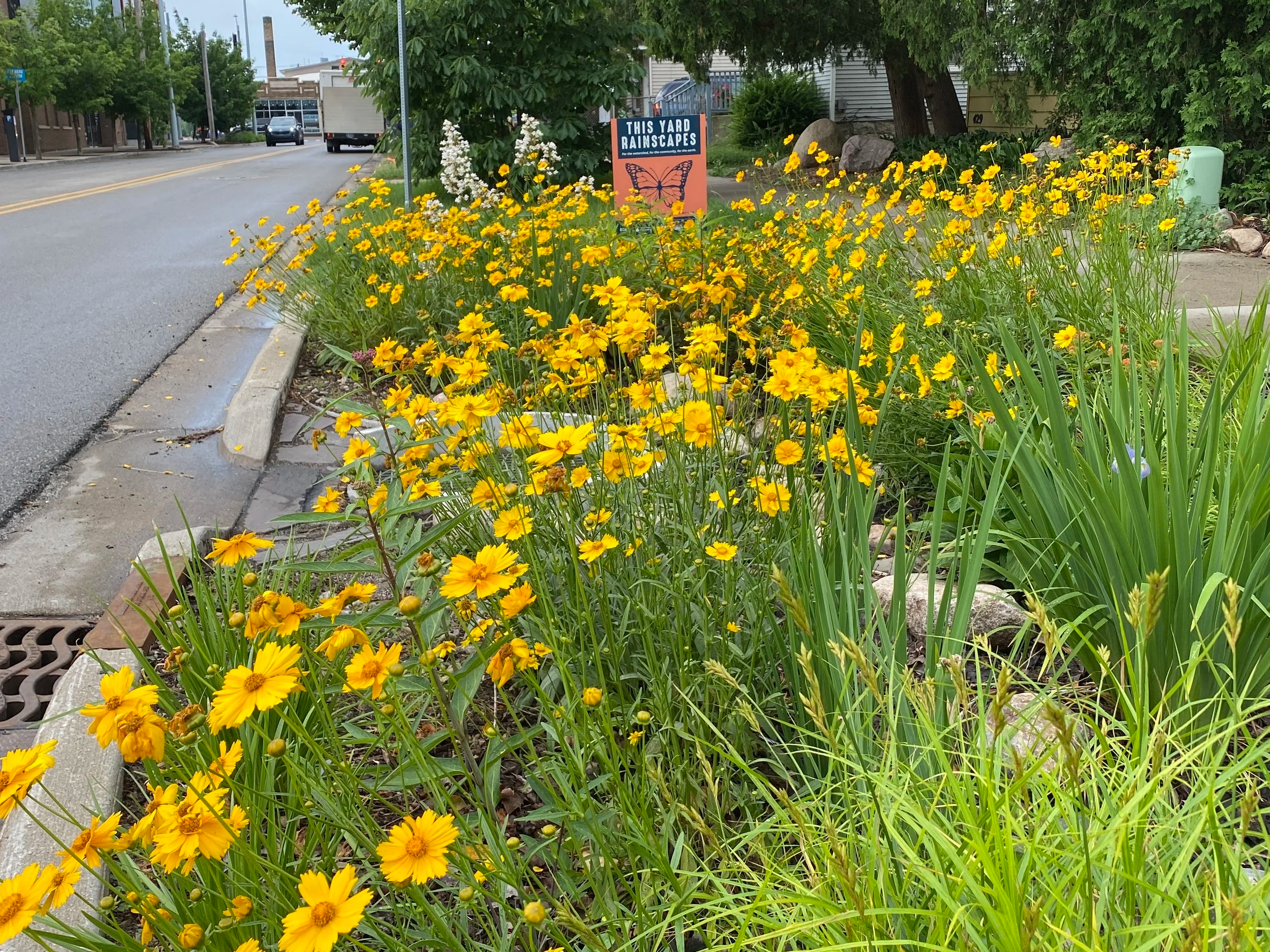
Rainscaping is a method of watershed restoration that promotes green infrastructure by managing stormwater as close as possible to where it falls. Rainscaping captures, diverts, infiltrates, or stores rainwater for a healthy water flow. Homeowners and businesses can customize green infrastructure using skilled landscapers and contractors.
Why is this important?
Rainscaping provides so many benefits to our lives:
Provides food and habitat for birds and pollinators
Prevents pollution carried by stormwater from flowing down stormdrains
Protects our lakes and streams by using native plants, raingardens, trees, rain barrels or by creating a streamside buffer
Creates opportunities for adults and children to become educated on native plants and their benefits
Uses native plants and trees to improve wet problem areas in your yard
Creates beautiful gardens
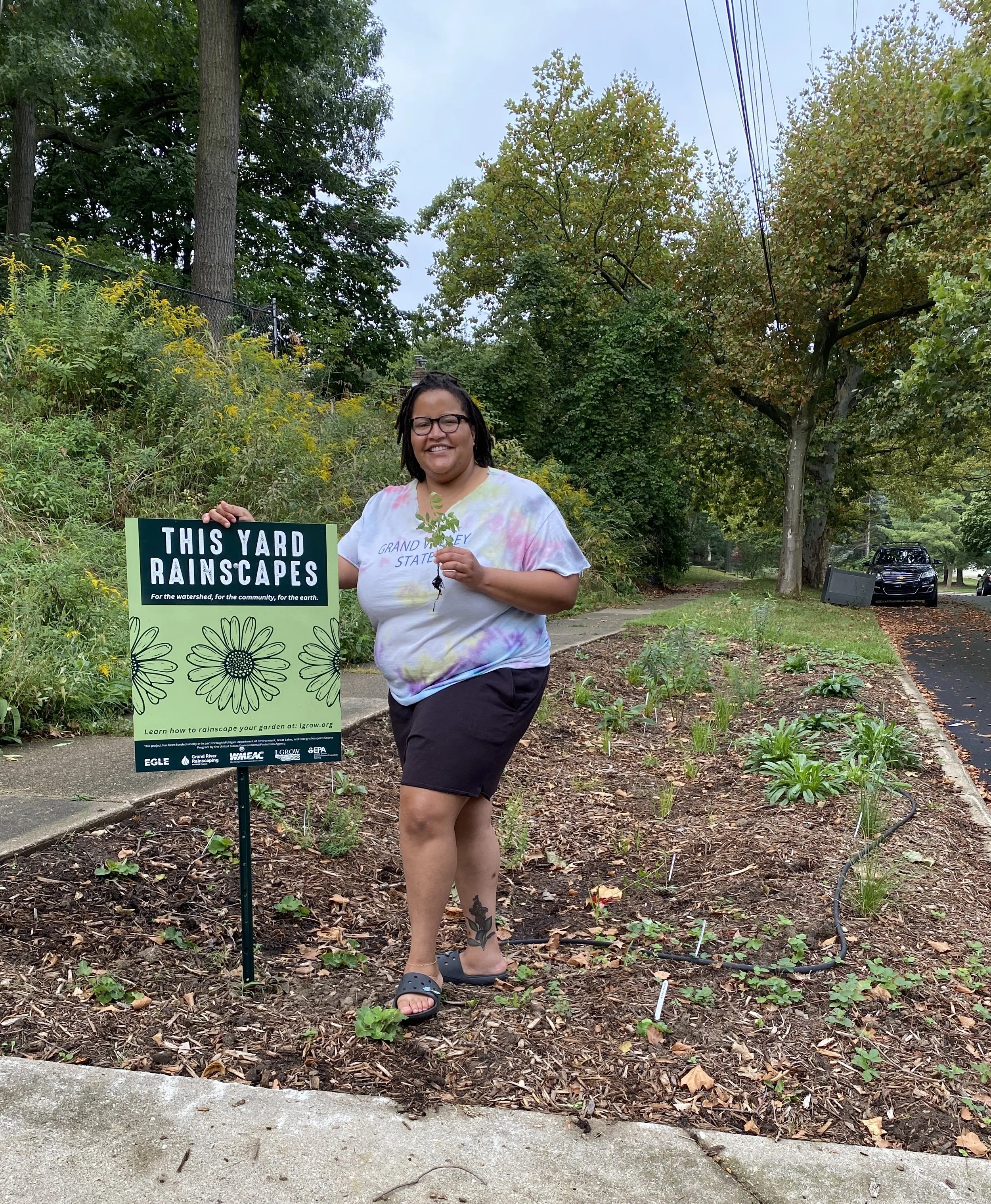
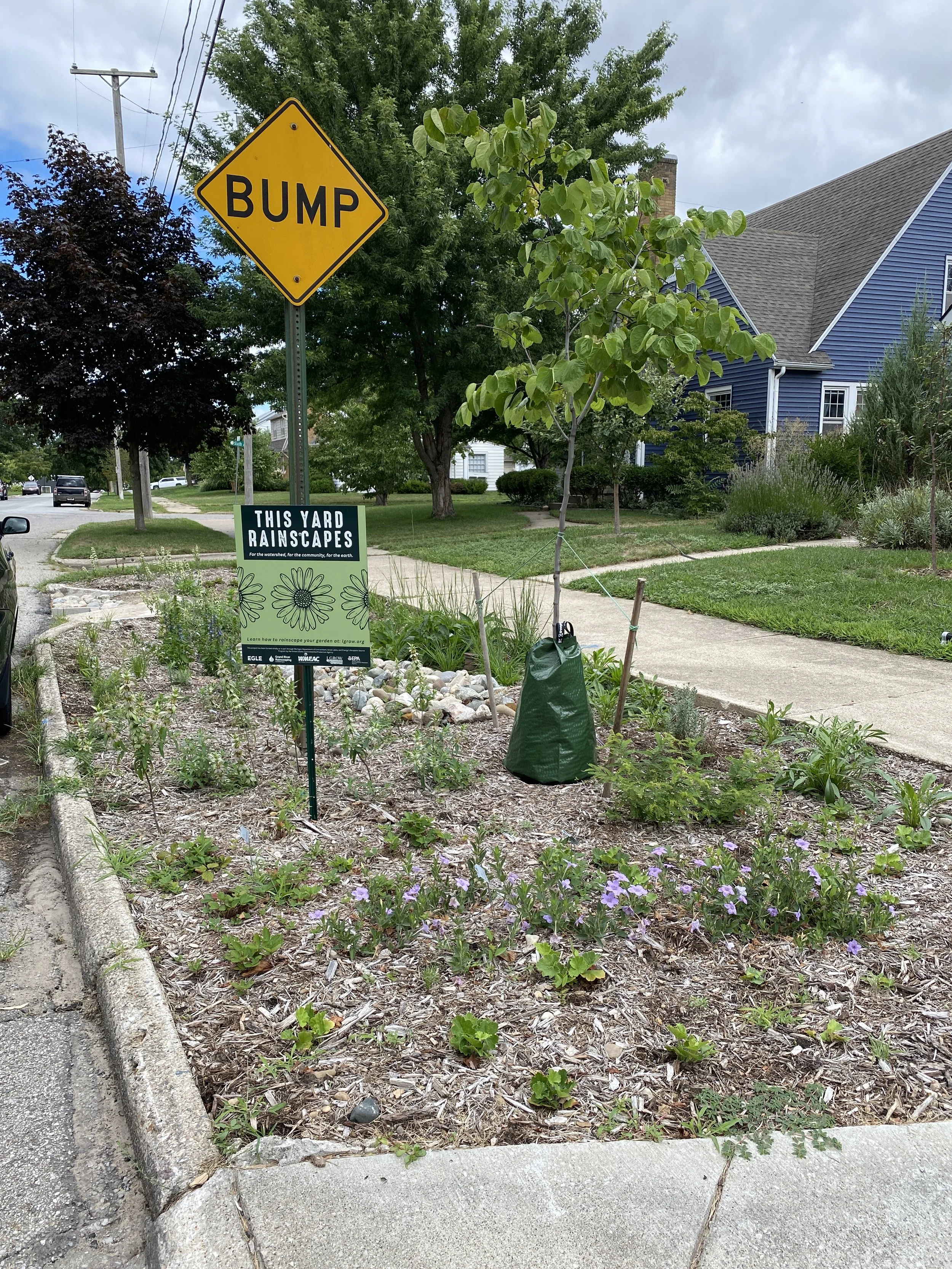
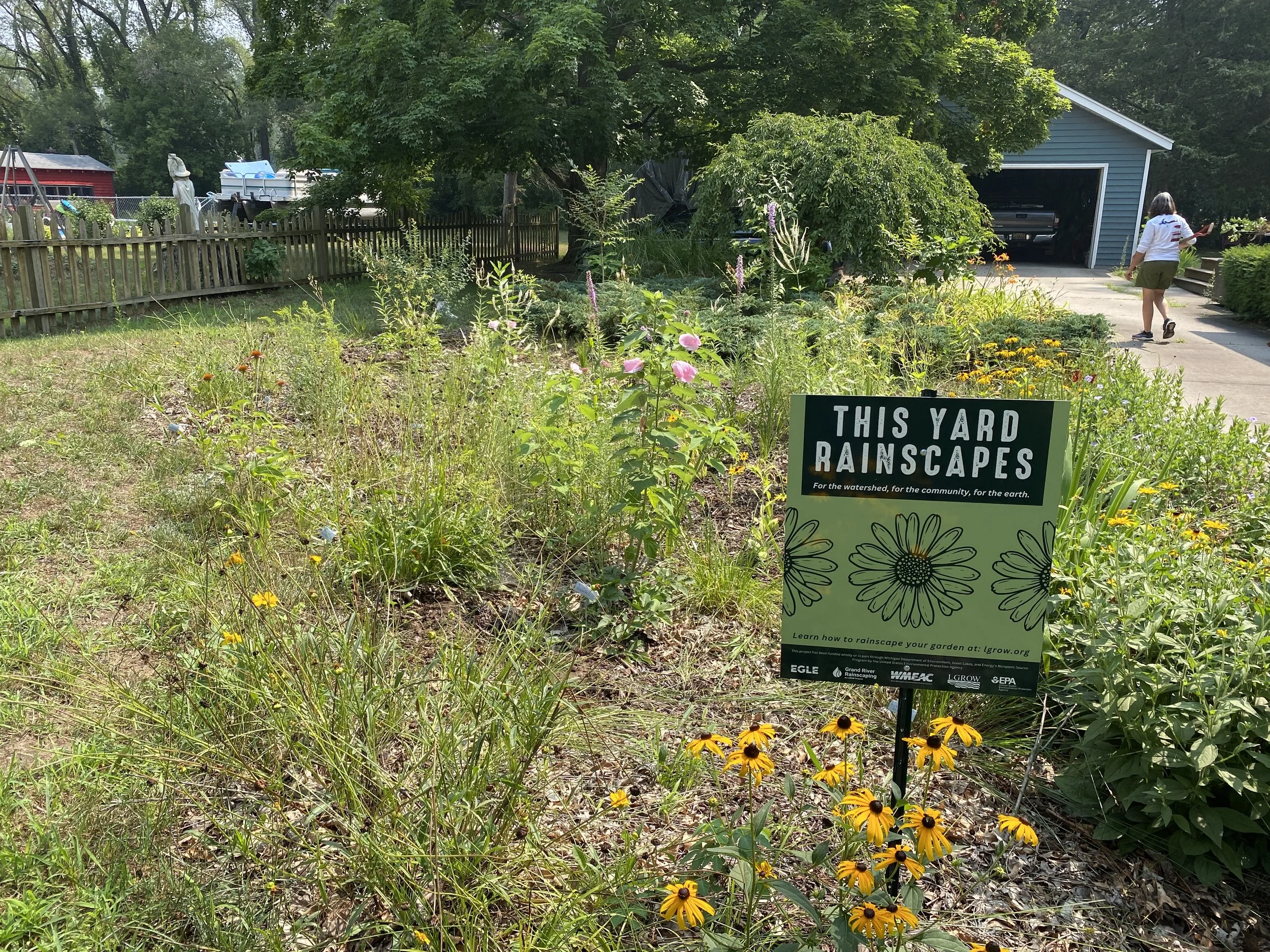
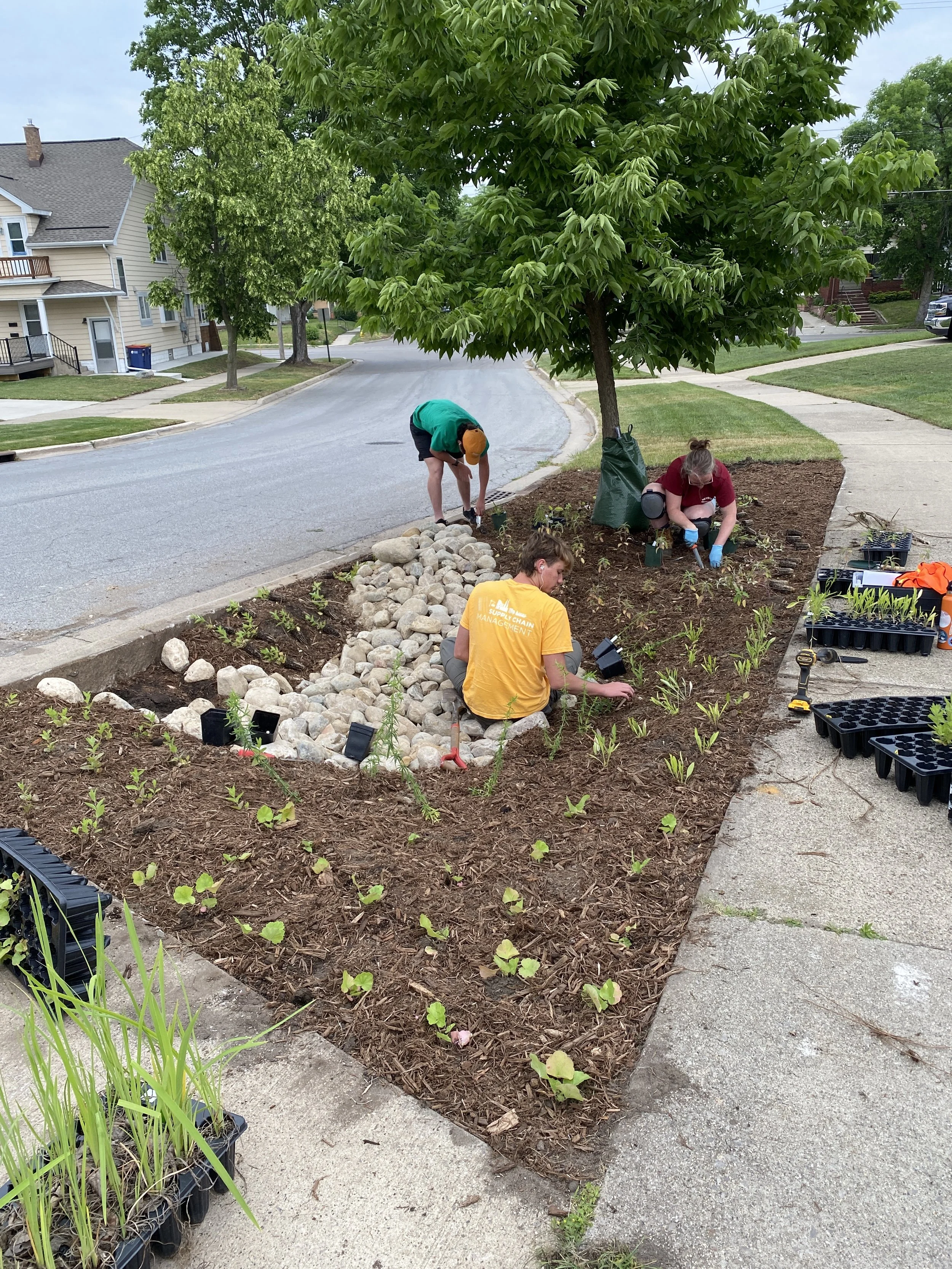
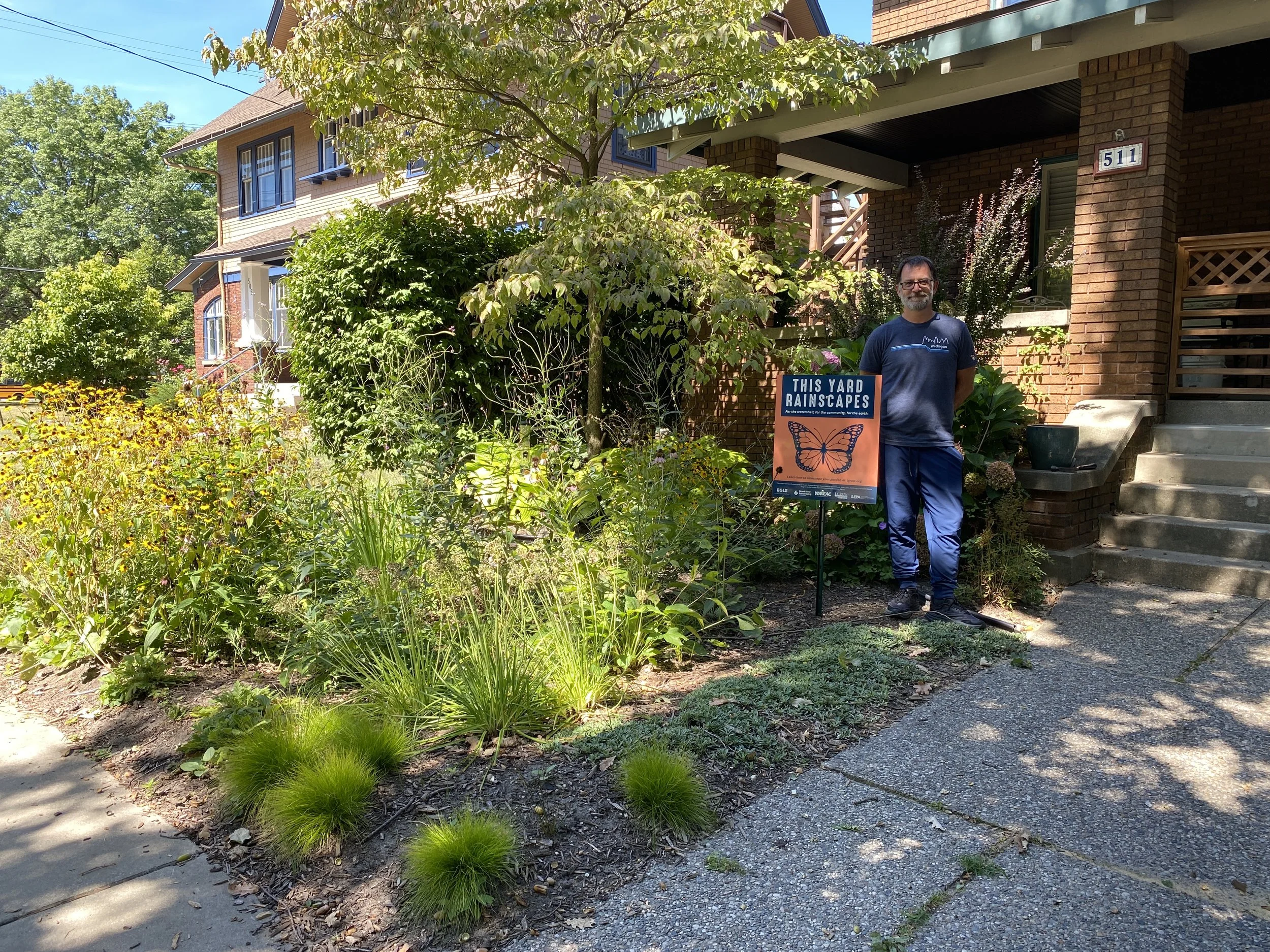
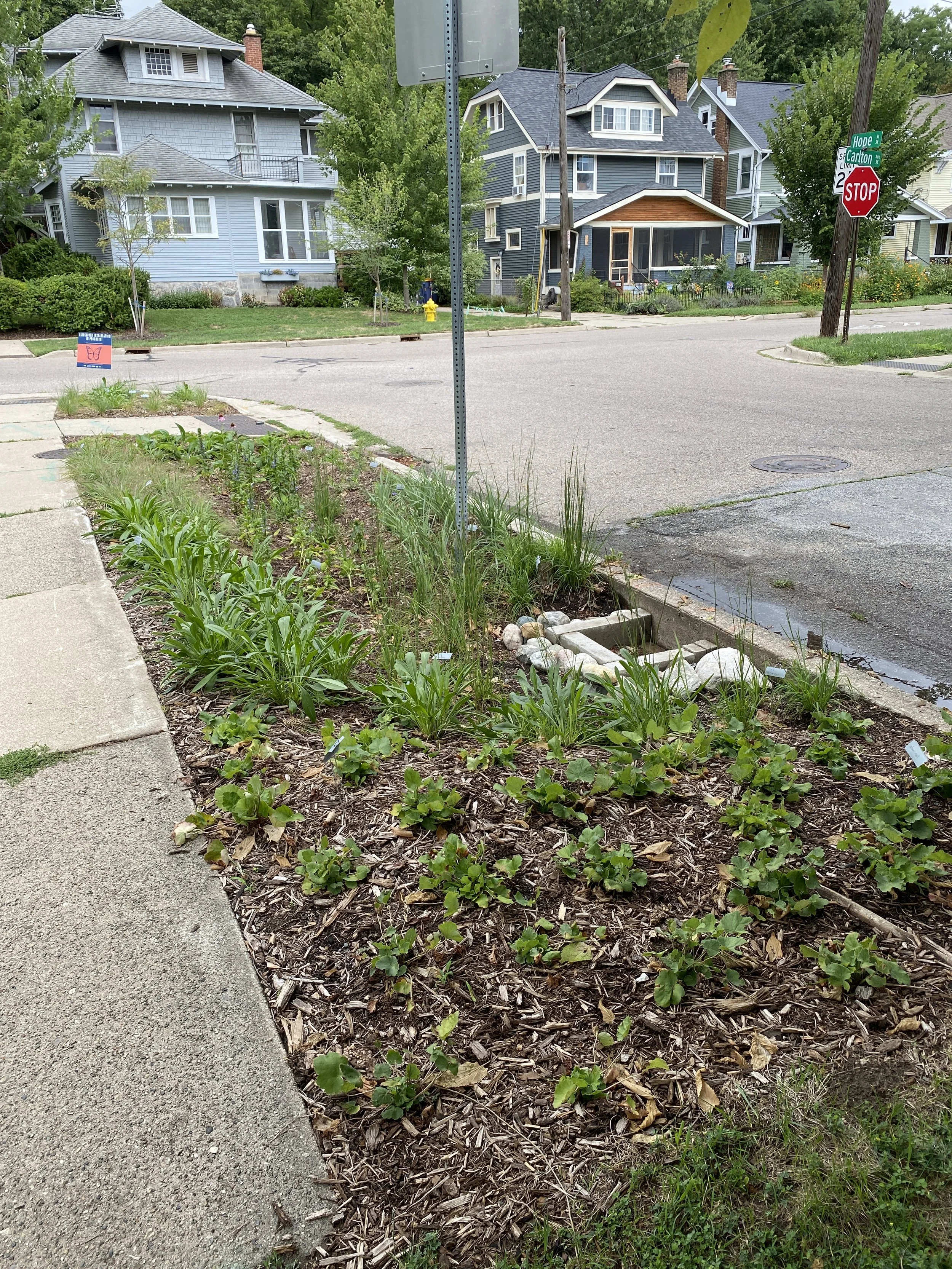
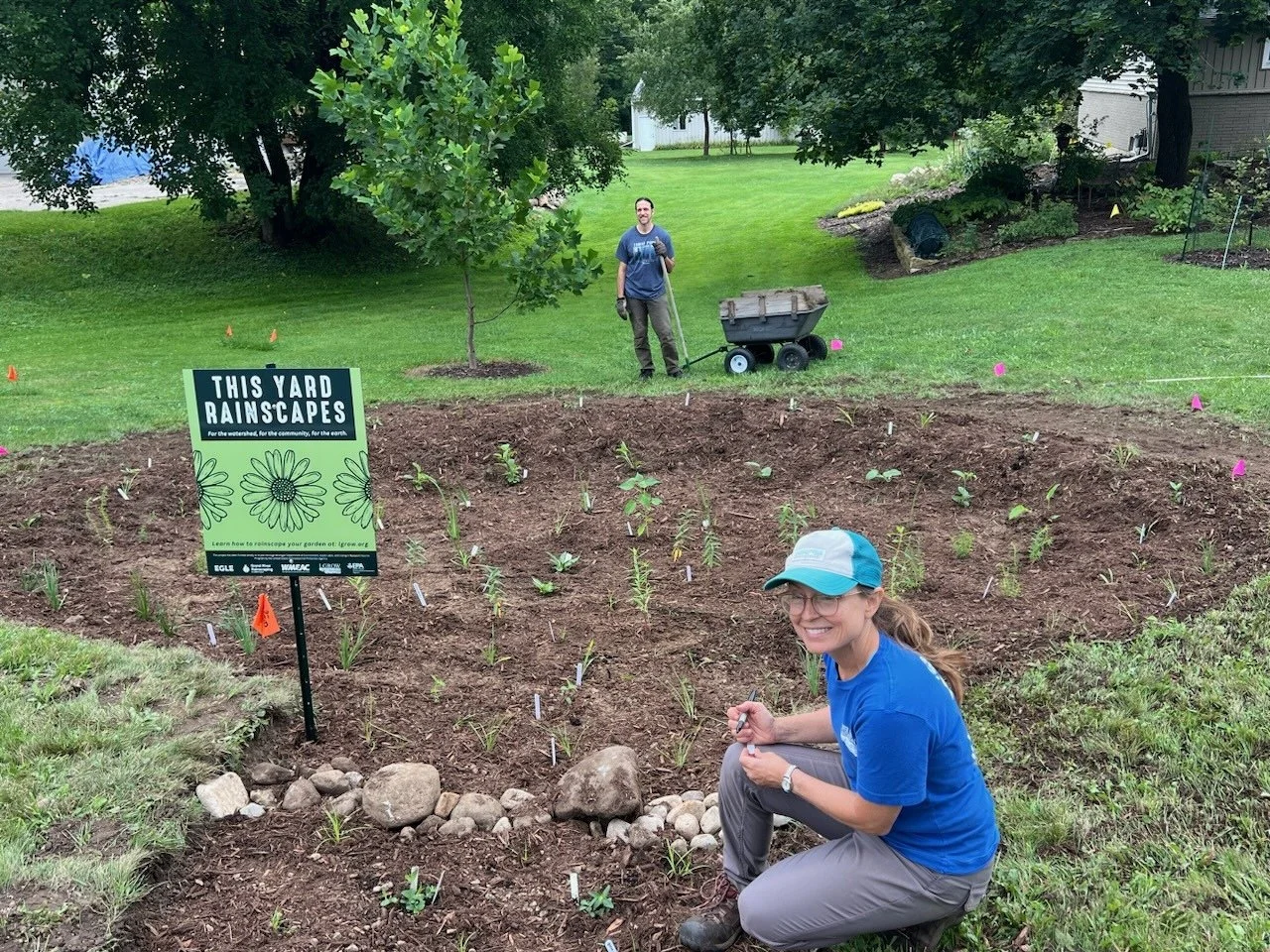
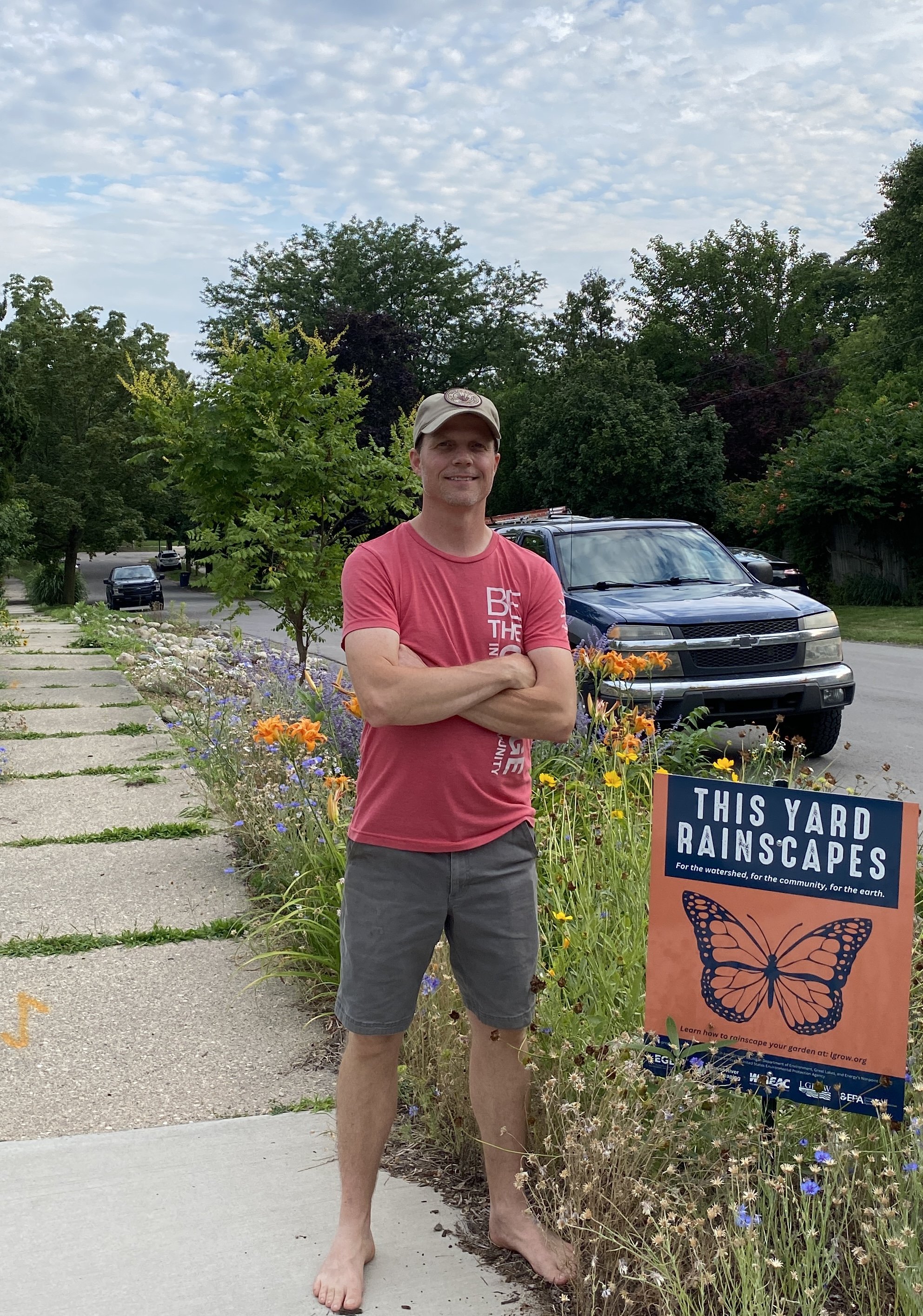
What Does LGROW Offer?
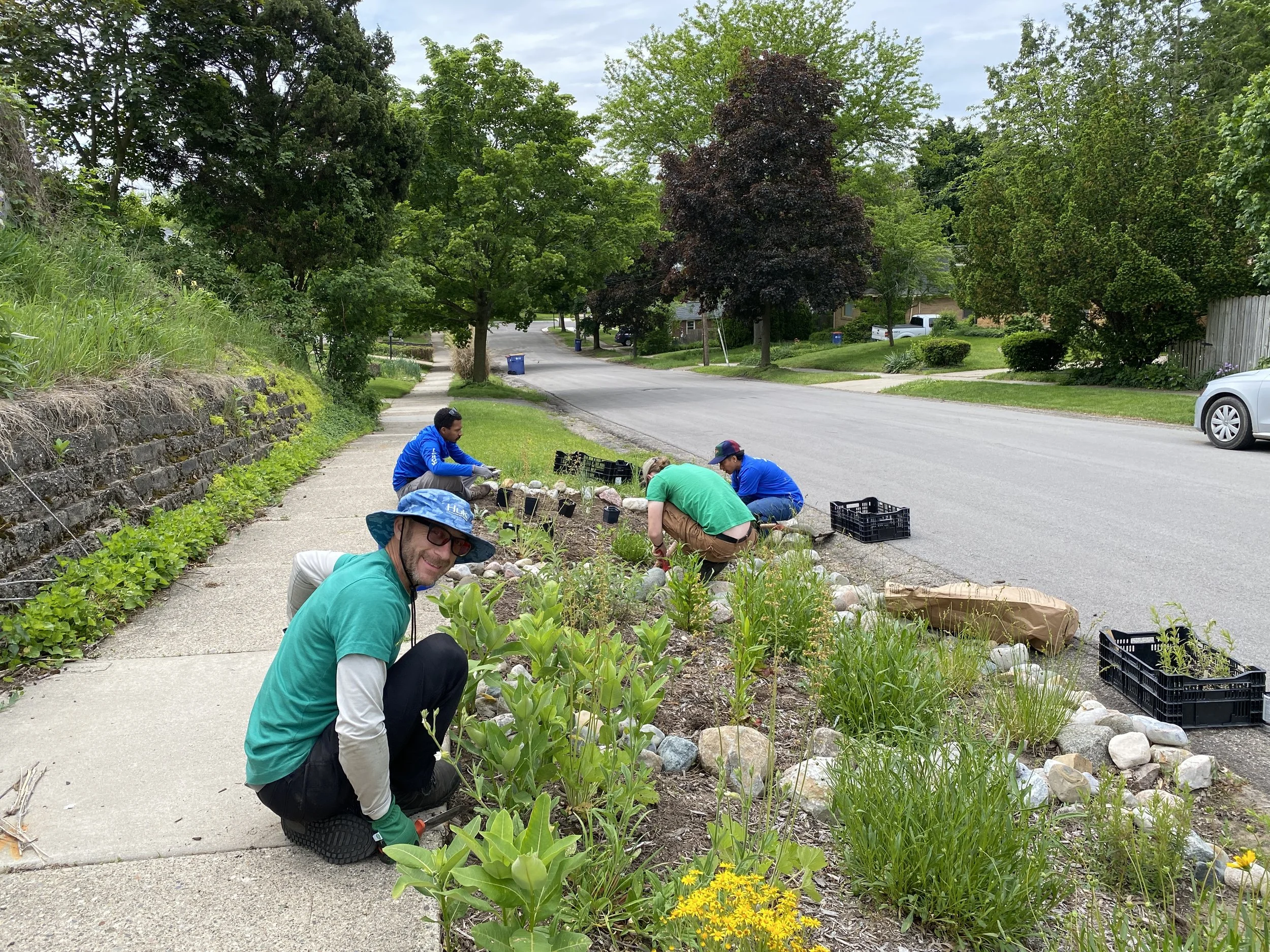
We provide resources and site assessments. We have resources above that provide residents and businesses with the tools to learn more about and replicate green infrastructure projects. We also have experience leading raingarden installations for homeowners.
Schedule a Residential Site Assessment
LGROW offers free site assessments to residents! A site assessment is used to determine if a specific area is suitable for rainscaping practices.
How it works
A trained assessor will visit your property to discuss ideas, goals, problems, and solutions for your site. The site visit will take between 30 and 60 minutes and the homeowner must be present. The assessor will write up a report and you will receive a personalized site assessment summary along with other helpful resources depending on your site.
If you are in the Plaster Creek Watershed, contact Plaster Creek Stewards for site assessment requests.
If you are in the Rogue River Watershed, contact Trout Unlimited - Home Rivers for site assessment requests.
Common Rainscaping Vocab
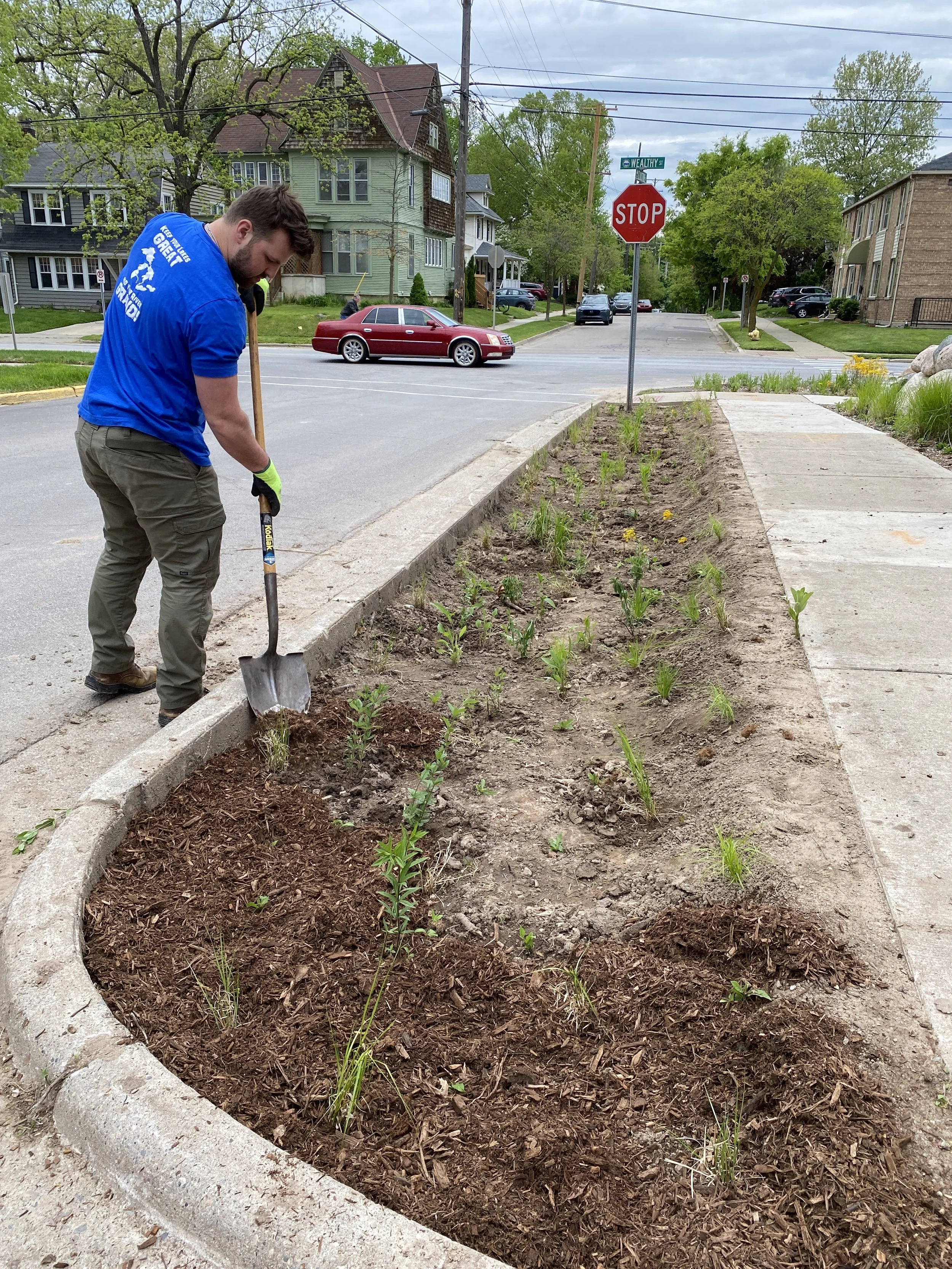
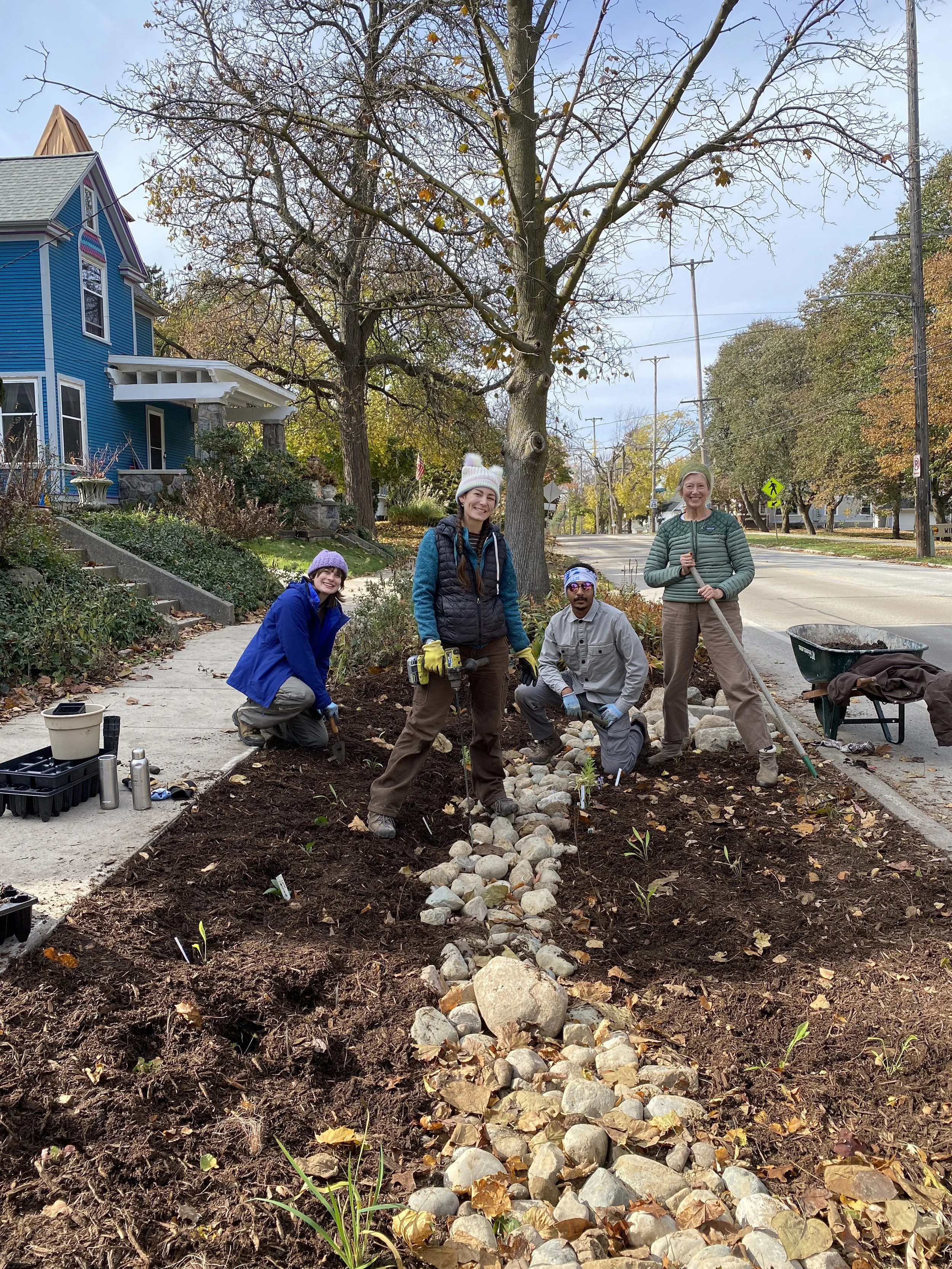
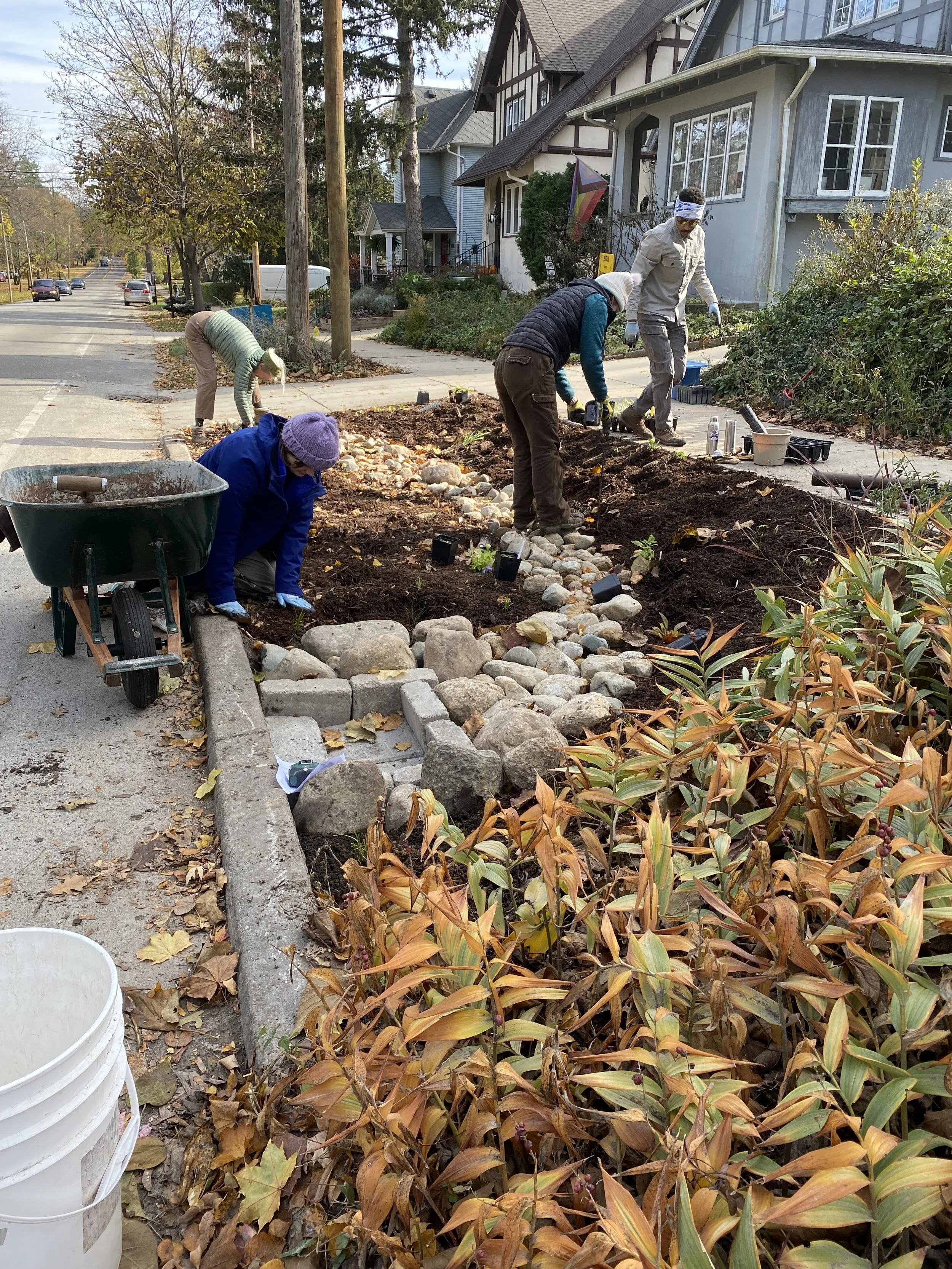
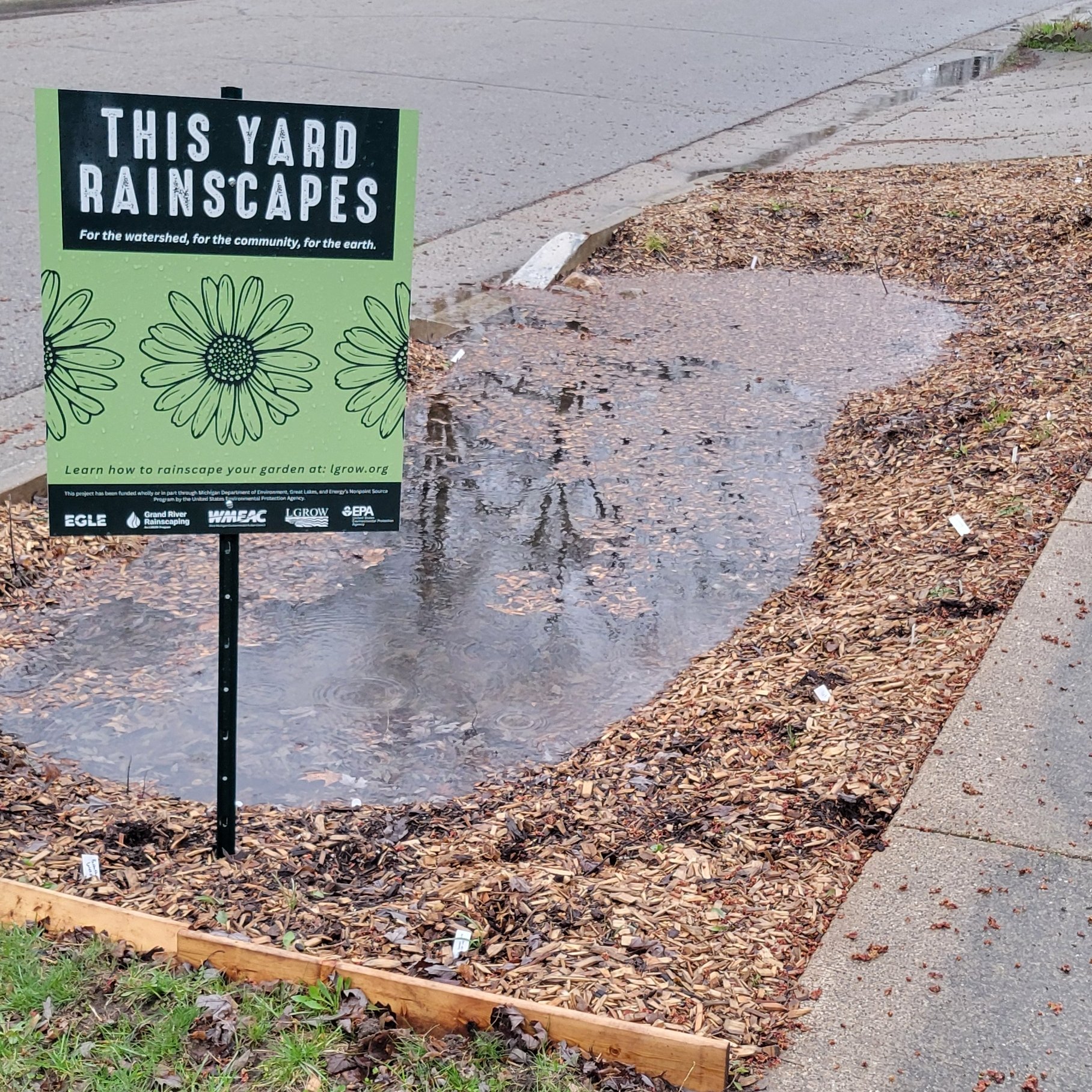
Rain Gardens: are filled with specifically selected native plants that absorb untreated stormwater in their deep root system, preventing it from contaminating our waterways.
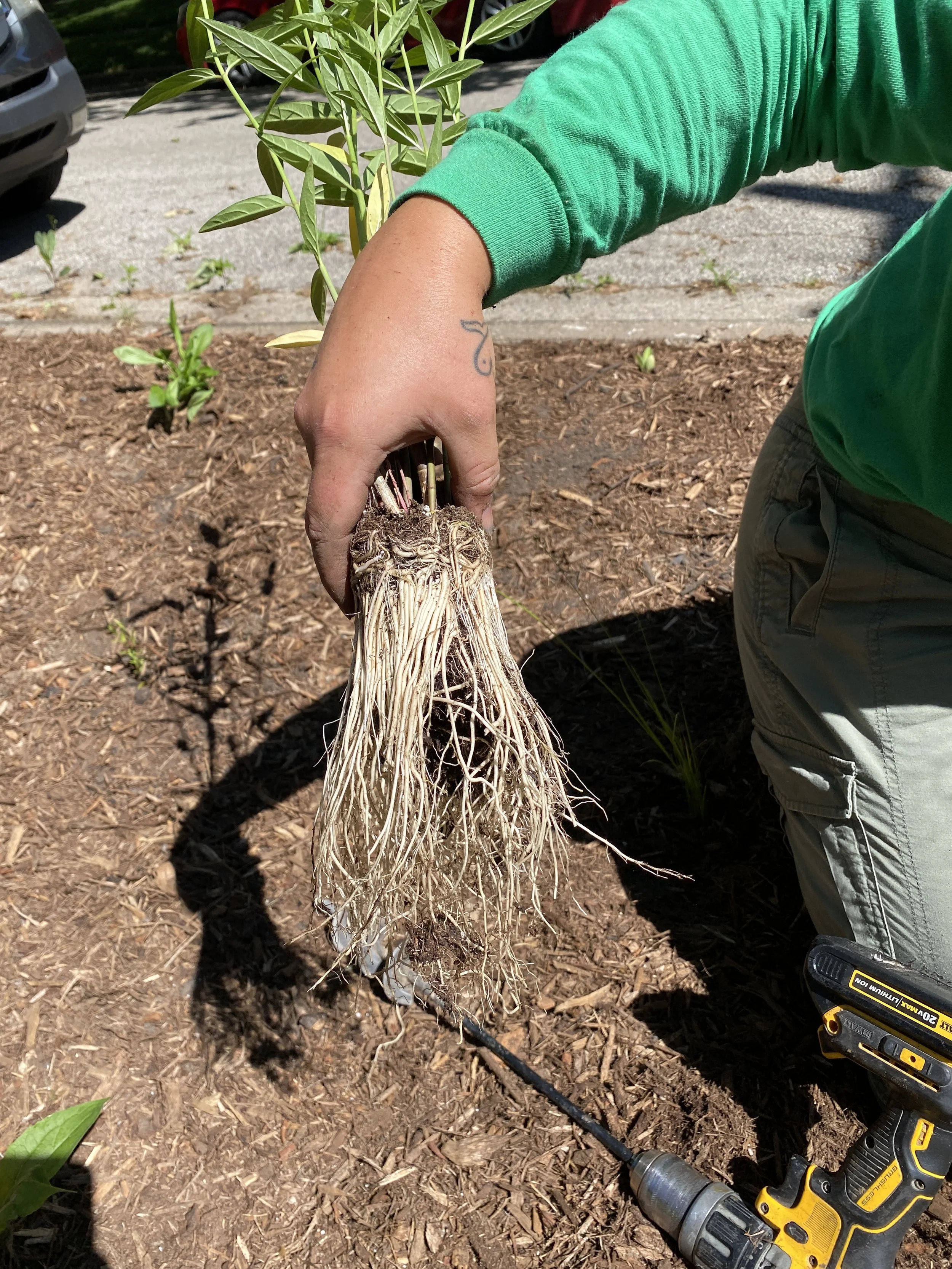
Native Plants/Trees: utilizes indigenous plant species and often attract pollinators and other beneficial insects to the site. Native plants have deep root systems which help stormwater infiltrate the ground, they also require less water, fertilizer, and care once established. Trees are increasingly recognized for their importance in managing stormwater runoff. Roots take up water and help create conditions in the soil that promote infiltration. Depending on the size and species, a single tree may store 100 gallons or more of stormwater.
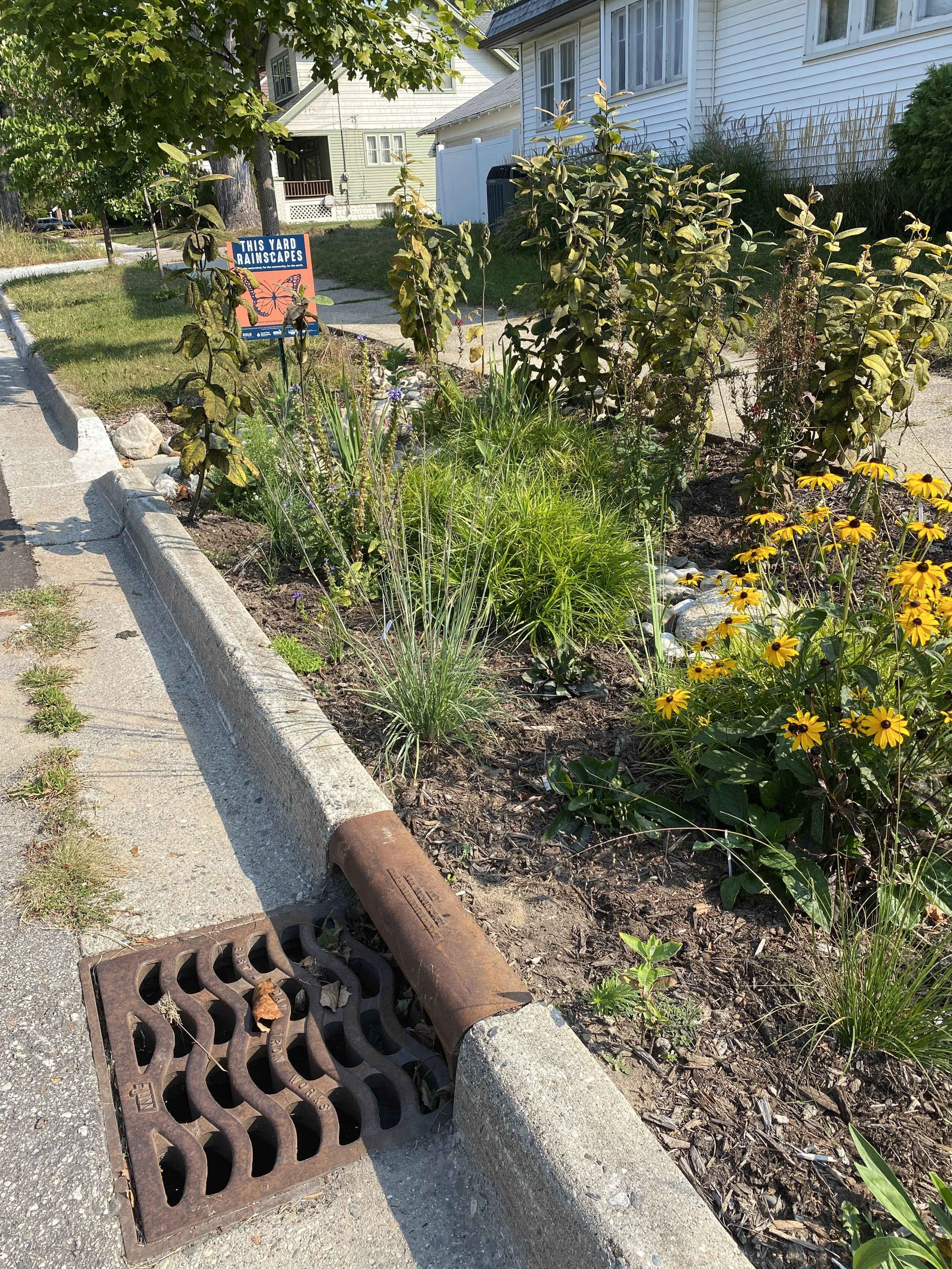
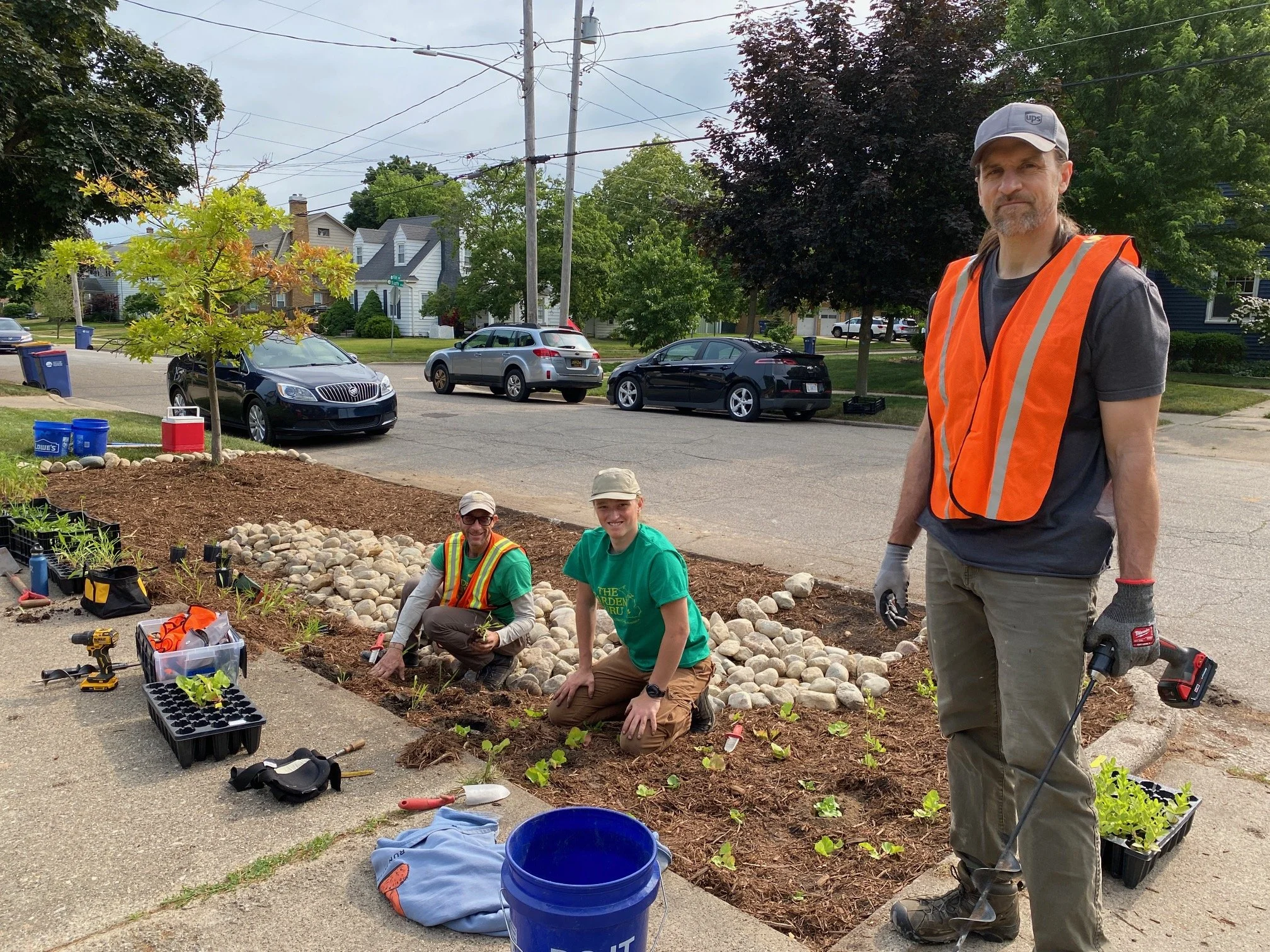
Curb Cuts: are bio-retention cells where portions of the concrete curb are removed in order to divert stormwater out of the streets and into the streetside rain gardens or other detention basins. The cells are dug so that they are at least 6 inches below ground level and are filled with plants and rocks to slow, spread, and soak up polluted stormwater runoff and prevent it from entering the storm sewer system.
Rain Barrels: are usually made from recycled ~50-gallon barrels but can be bought from home improvement or specialty stores. The barrels are connected to a downspout and capture and store rainwater for later use. Rain barrels can be made at home or bought already constructed from a home improvement store and must be cleaned and stored properly. Learn more at wmeac.org/rainbarrels
Riparian/Buffer Zone: also known as a “streamside buffer”, is made up of native plants that surround a river or waterway and control erosion, filter pollutants, protect fish, reduce flooding, and provide suitable wildlife habitat. “Riparian zones may be natural or engineered for soil stabilization or restoration. These zones are important natural biofilters, protecting aquatic environments from excessive sedimentation, polluted surface runoff, and erosion. They supply shelter and food for many aquatic animals and shade that limits stream temperature change. Research shows that riparian zones are instrumental in water quality improvement for both surface runoff and water flowing into streams through subsurface or groundwater flow. Riparian zones can play a role in lowering nitrate contamination in surface runoff, such as manure and other fertilizers from agricultural fields, that would otherwise damage ecosystems and human health. (source)
Learn more about Natural Shorelines
Contact Us!
Watershed Partners